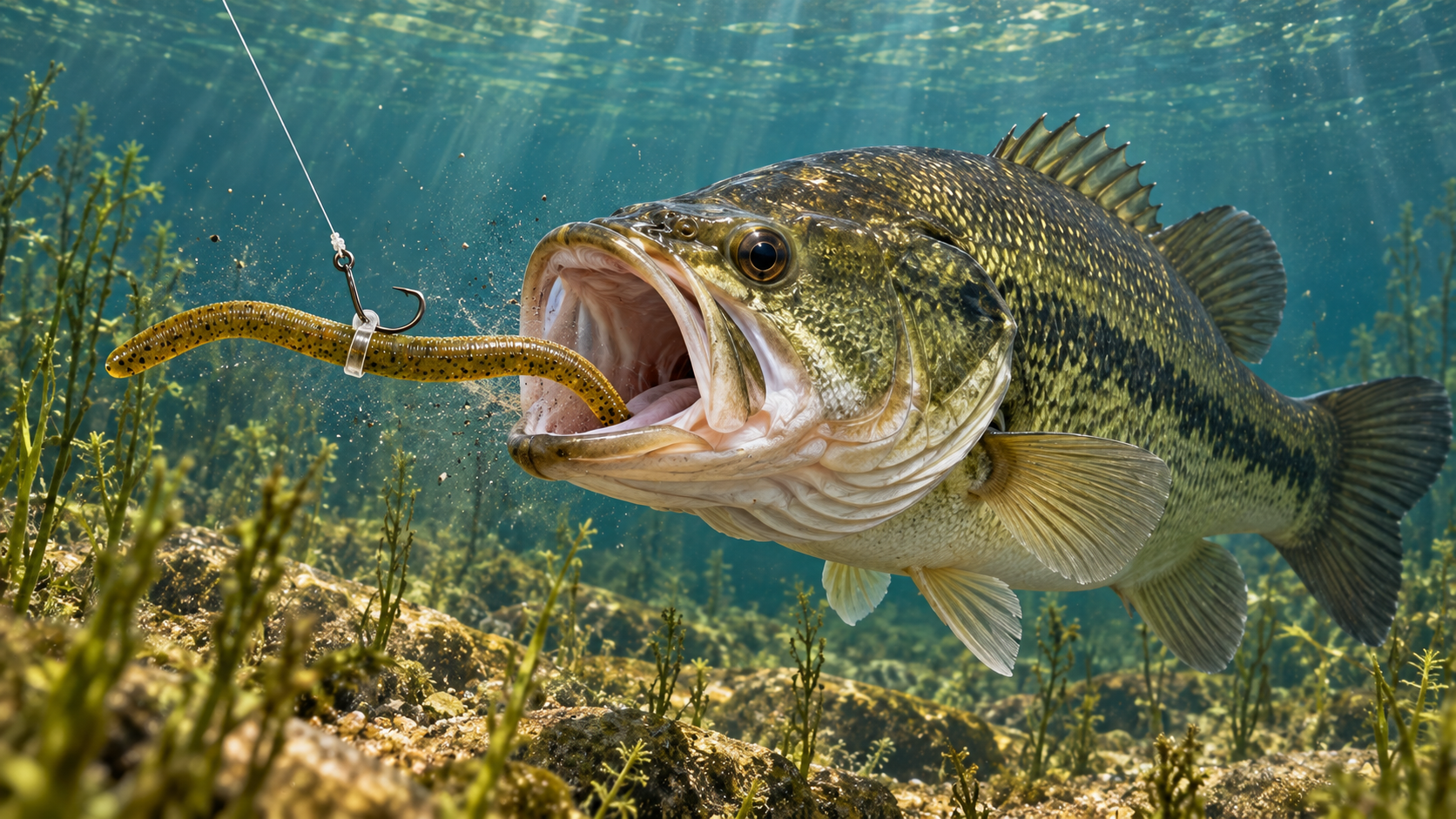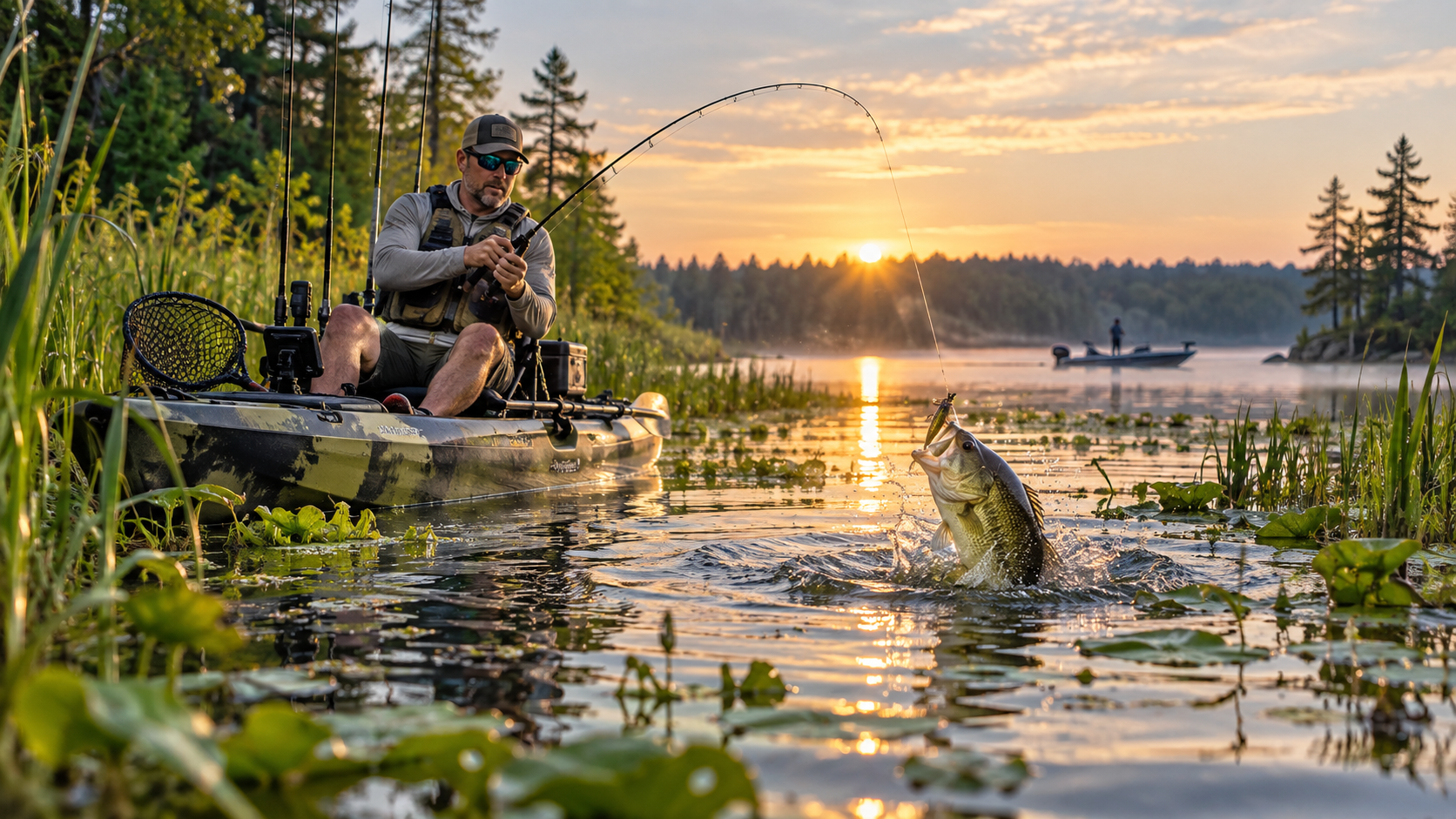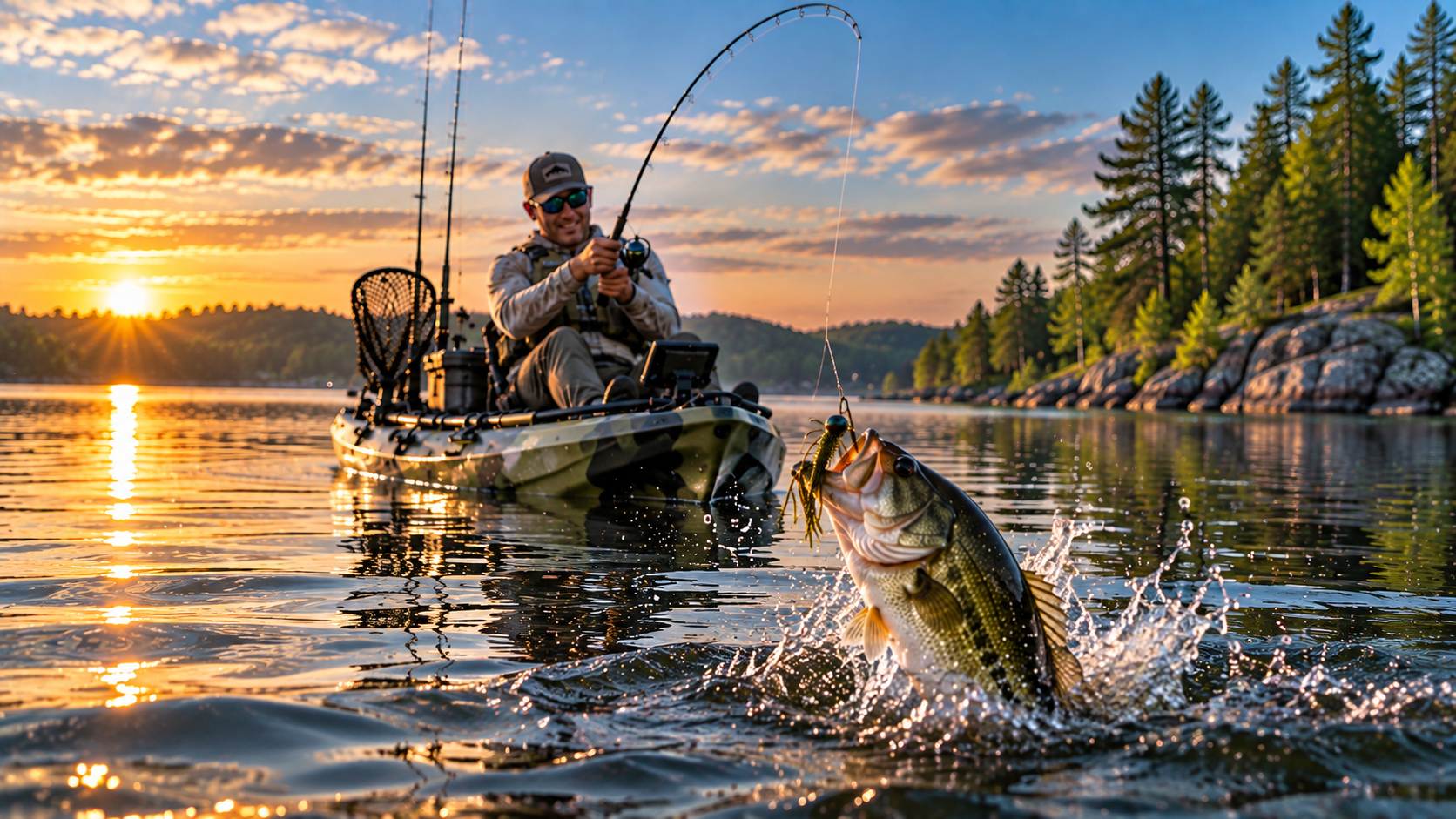
A soft-plastic worm, a small hook, and a patient approach can go a long way…
A ChatterBait might be one of the most effective and versatile bass lures you can throw from a fishing kayak in Minnesota. Whether you’re targeting largemouth bass along a weedy shoreline, fishing the edges of submerged vegetation, or searching for aggressive smallmouth bass, this vibrating bladed jig can produce some impressive results.
For Minnesota kayak anglers, a ChatterBait offers a particularly valuable advantage: it lets you cover water efficiently while maintaining the stealth and precise boat control that make kayak fishing so effective.
But there’s more to fishing a ChatterBait than simply casting and reeling it back.
Knowing where to throw it, how fast to retrieve it, and when to change your presentation can make the difference between an occasional bite and an outstanding day on the water.
What Is a ChatterBait?
A ChatterBait is a type of bladed jig featuring a metal blade attached to the front of a weighted jighead. As the lure moves through the water, the blade vibrates rapidly, creating movement, flash, and water displacement.
That vibration is what makes the lure so effective.
Bass can detect the lure’s movement through their lateral line, even when visibility is limited by stained water, vegetation, or low-light conditions.
Most ChatterBaits feature:
- A metal blade that creates vibration and flash
- A weighted jighead with a single hook
- A silicone skirt that adds movement and bulk
- A soft-plastic trailer that changes the lure’s profile and swimming action
The combination produces a lure that resembles a fleeing baitfish, bluegill, or other bass prey.
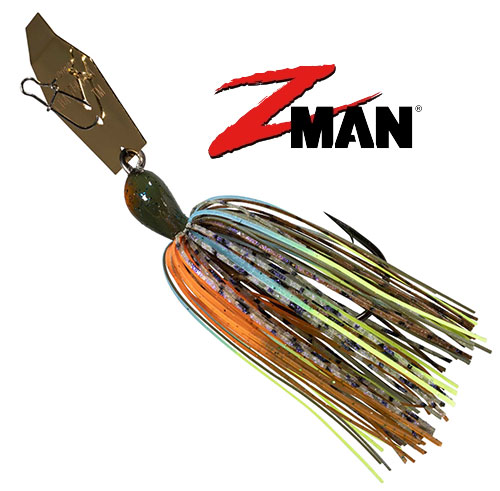
Although “ChatterBait” is a trademarked lure name associated with Z-Man, anglers often use the term to describe bladed jigs generally. Z-Man offers an extensive line of ChatterBaits that offer lots of variation. They can be more expensive than other models, but they are the brand I prefer. In particular, I am a fan of the Z-Man Big Blade ChatterBbait. My favorite is a half ounce Bluegill color. I do always have other colors in my kayak.
Why ChatterBaits Are Great for Minnesota Kayak Fishing
Minnesota’s lakes provide excellent habitat for largemouth bass, particularly in areas featuring cabbage weeds, coontail, milfoil, lily pads, and submerged vegetation. These are exactly the environments where bladed jigs can shine. Fishing from a kayak offers several advantages.
1. Quiet approaches to shallow water. Kayaks allow anglers to approach shallow weed beds, shoreline cover, and protected bays with relatively little disturbance.
2. Better casting angles. A kayak can be positioned parallel to weed edges, allowing you to keep a ChatterBait in productive water throughout much of the retrieve.
3. Access to overlooked water. Small bays, narrow channels, and shallow sections of Minnesota lakes may receive less pressure from larger fishing boats.
4. Efficient water coverage. A ChatterBait is an excellent search bait. Instead of slowly working every piece of cover, you can make repeated casts while moving along a shoreline or weedline.
MNKFA Tip: Position your kayak far enough from a weed edge to make long casts parallel to it. This keeps your lure in the strike zone longer than repeatedly casting straight toward shore.
Best Places to Fish a ChatterBait in Minnesota
1. Outside Weed Edges
If you’re fishing a Minnesota lake during summer, start by locating healthy submerged vegetation. Largemouth bass frequently use the outside edges of weed beds as ambush locations.
Cast parallel to the vegetation and retrieve your ChatterBait close enough to occasionally contact the weeds. When the lure catches a strand of vegetation, snap your rod tip to free it. That sudden burst of movement often triggers a reaction strike.
Best approach: Keep your kayak outside the weedline and make long casts along its edge.
2. Shallow Bays in Spring
As Minnesota lakes warm during spring, bass move into protected bays and shallow areas. ChatterBaits can be particularly effective around emerging vegetation, especially during the prespawn period.
Try a slow, steady retrieve that keeps the lure just above the bottom or emerging weeds. In colder water, a slower presentation is often more productive than burning the lure back to the kayak.
3. Lily Pad Edges and Vegetation Openings
Lily pad fields can hold excellent largemouth bass throughout summer. A ChatterBait works best along the outside edges, openings, and lanes between pads rather than through the thickest stems.
Make accurate casts into open-water pockets and retrieve the lure past likely ambush points. If the cover becomes too dense, switch to a more weedless presentation.
4. Windblown Shorelines
Wind can push baitfish toward shorelines, points, and weed edges. The vibration and flash of a ChatterBait make it an excellent choice when wind creates surface chop.
A kayak angler can work along these areas while casting toward productive cover. However, wind direction and boat positioning become especially important when fishing from a lightweight kayak.
5. Rocky Points and Mixed Rock-Weed Areas
Although bladed jigs are often associated with largemouth bass and vegetation, they can also catch Minnesota smallmouth bass. Try fishing a ChatterBait around rocky points, scattered boulders, and transitions where rock meets vegetation. Maintain enough retrieve speed to keep the lure above areas where the exposed hook might snag.
The 5 Best ChatterBait Retrieves for Kayak Anglers
One of the biggest mistakes anglers make is using the same retrieve all day. Changing your retrieve can dramatically affect how bass react to the lure.
1. Slow and Steady
Best for: Spring, fall, cold fronts, and less aggressive bass.
Cast your ChatterBait and allow it to sink to the desired depth. Begin a slow retrieve, maintaining just enough speed to keep the blade vibrating. Occasionally pause or slightly accelerate to change the lure’s action.
This is an excellent starting presentation when bass are reluctant to chase faster-moving baits.
2. The Burn and Kill
Best for: Active bass during summer and early fall.
Retrieve the ChatterBait quickly for several feet, then suddenly stop reeling. The lure will drop or change direction depending on its trailer and the amount of line tension. Resume the retrieve after a brief pause.
The abrupt change can trigger strikes from bass following the lure.
3. Rip It Free From Vegetation
Best for: Submerged cabbage, coontail, and scattered weed beds.
Retrieve your ChatterBait until it contacts vegetation. When you feel the blade stop vibrating or the lure begin to load up with weeds, give the rod a sharp snap. This frees the lure and causes it to surge forward. Be ready for an immediate strike.
For many Minnesota bass anglers, this is one of the most productive ways to fish a bladed jig.
4. The Yo-Yo Retrieve
Best for: Deeper weed edges and suspended fish near structure.
Allow the ChatterBait to sink. Lift the rod tip to make the lure rise, then lower the tip while retrieving enough slack to maintain contact. Repeat throughout the retrieve.
This creates a rising and falling action that can imitate an injured baitfish.
5. Bottom Contact and Slow Rolling
Best for: Sparse vegetation, hard-bottom transitions, and cooler water.
Allow the lure to reach bottom, then retrieve slowly enough to occasionally make contact. Use short lifts or changes in retrieve speed to keep the blade working.
Avoid dragging it through heavy rock or wood, where the exposed hook can easily snag.
Choosing the Best ChatterBait for Minnesota Bass
You don’t need a tackle box filled with different bladed jigs to catch Minnesota bass. A few carefully selected sizes and colors will handle most situations.
Best ChatterBait Colors
| Color | Best Conditions |
|---|---|
| Green Pumpkin | Clear to moderately stained water, bluegill forage |
| Black and Blue | Stained water, cloudy conditions, low light |
| White | Shad-like baitfish, minnows, and bright presentations |
| White and Chartreuse | Stained water and aggressive reaction bites |
| Bluegill Patterns | Weed beds where bluegill and sunfish are common |
Minnesota recommendation: Start with green pumpkin for natural presentations around vegetation and white or white/chartreuse when bass are chasing baitfish.
What Weight Should You Use?
3/8 ounce: A versatile starting choice for shallow bays, vegetation, and water roughly 2–6 feet deep.
1/2 ounce: Excellent for covering water, fishing moderate depths, and maintaining control in wind.
3/4 ounce: Useful for deeper presentations, strong wind, or situations requiring faster retrieves without the lure rising too high.
For most Minnesota kayak bass fishing, a 3/8- or 1/2-ounce bladed jig will cover a wide range of conditions. If I was to get just one ChatterBait to start, it would be a Z-Man half ounce Big Blade Bluegill color. You can keep it higher in the water and across submerged weed beds by raising your rod tip on retrieve, or let it sink lower
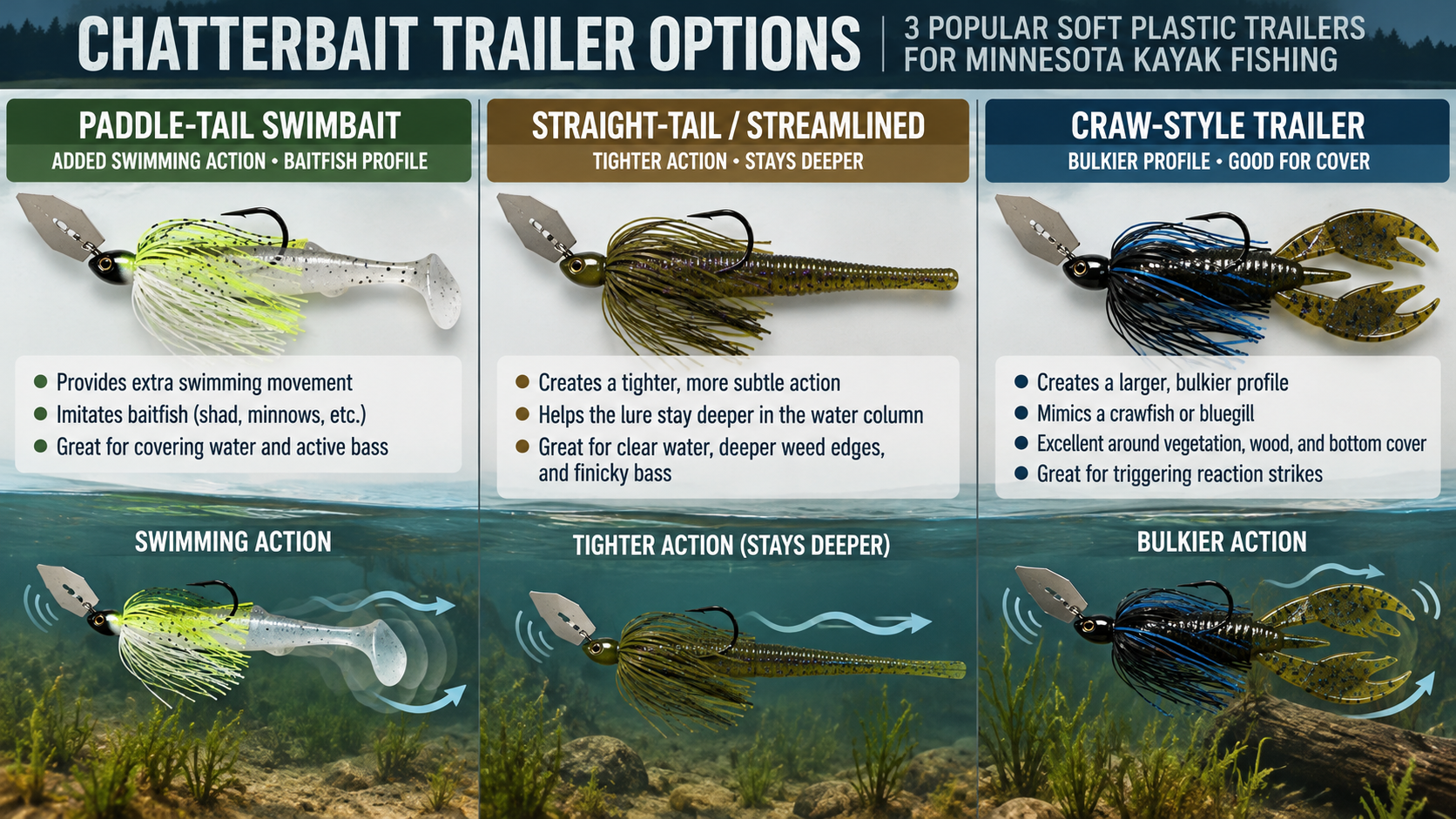
Don’t Forget the ChatterBait Trailer
A soft-plastic trailer can change how your ChatterBait performs.
Experiment with trailer styles and colors before assuming the fish simply aren’t interested in a ChatterBait.
Best Rod, Reel, and Line Setup
A properly matched rod and reel make fishing a ChatterBait easier, especially from a seated kayak position.
Recommended setup:
- Rod: 7’0″–7’3″ medium-heavy power with a moderate-fast or forgiving fast action
- Reel: Baitcasting reel with approximately a 6.3:1 to 7.3:1 gear ratio
- Line: 15–17 lb fluorocarbon for open water and moderate vegetation
- Alternative: 30–40 lb braided line for heavier vegetation, where appropriate
A rod with some give can help keep bass hooked when they strike a moving lure.
Fluorocarbon is a good general-purpose choice because of its abrasion resistance and sinking characteristics.
Braided line provides excellent sensitivity and can help cut through vegetation, but its lack of stretch requires careful drag settings and a controlled hookset.
How to Position Your Kayak for ChatterBait Fishing
Kayak positioning may be just as important as lure selection. Unlike anglers in larger bass boats, kayak fishermen sit closer to the water and often have limited room for sweeping hooksets. Good positioning improves lure control, strike detection, and fish landing.
Fish Parallel to Cover
Instead of repeatedly casting directly toward a weed bed, position your kayak alongside it. Cast down the edge and retrieve the lure through the productive zone. This allows you to cover more water with fewer casts.
Control Your Drift
Wind can move a kayak quickly enough to change the speed and depth of your retrieve. A pedal-drive kayak, anchor, or properly used drift-control system can help maintain your casting position. A motor with spot-lock positioning is the ultimate boat control.
Use anchoring equipment appropriate for the water and conditions, and avoid anchoring in unsafe current.
Pay Attention to Your Retrieve Angle
When fishing from a seated position, keep your rod tip positioned so you can feel the ChatterBait vibrating. If the vibration suddenly stops, the lure may have contacted vegetation, fallen into slack line, or been inhaled by a bass.
Not every strike feels like a dramatic hit.
Seasonal ChatterBait Fishing in Minnesota
| Season | Where to Fish | Recommended Presentation |
|---|---|---|
| Spring | Protected bays, emerging weeds | Slow and steady |
| Early Summer | Weed edges, shallow flats | Steady retrieve, occasional pauses |
| Mid-Summer | Healthy weedlines, vegetation openings | Rip-and-release, burn and kill |
| Early Fall | Baitfish areas, remaining green weeds | Moderate to fast retrieve |
| Late Fall | Deeper weed edges, hard-bottom transitions | Slow rolling, yo-yo retrieve |
One of the biggest seasonal factors in Minnesota is vegetation growth.
During summer, healthy green weeds often provide excellent bass habitat.
As water temperatures fall and vegetation begins dying back, bass may shift toward remaining healthy weeds, nearby structure, and available forage.
Adjust your fishing location as these conditions change.
Common ChatterBait Mistakes
Reeling too fast in cold water. Bass may be unwilling to chase a fast-moving lure during spring or late fall.
Fishing too far away from cover. Bladed jigs are often most effective when they occasionally contact vegetation or pass close to ambush points.
Using the wrong trailer. A bulky trailer may cause the lure to rise higher than intended or change its vibration.
Setting the hook too early. When you feel a strike, allow the rod to load before making a firm, controlled sweep.
Ignoring the wind. Poor kayak positioning can ruin an otherwise productive retrieve.
Giving up too quickly. Sometimes a small change in retrieve speed, trailer, color, or casting angle makes all the difference.
A Simple ChatterBait Strategy for Your Next Minnesota Kayak Fishing Trip
If you’re new to fishing a ChatterBait, here’s a straightforward approach.
- Start along a healthy weedline in approximately 3–8 feet of water.
- Tie on a 3/8- or 1/2-ounce green pumpkin ChatterBait.
- Add a natural-colored soft-plastic trailer.
- Position your kayak to cast parallel to the vegetation.
- Begin with a steady retrieve just above the weeds.
- Occasionally contact vegetation and snap the lure free.
- If bass aren’t responding, change your retrieve speed or trailer before moving to a new location.
Use your fish finder to identify weed edges, depth changes, and nearby structure. The objective is to locate active bass while keeping your lure in productive water as long as possible.
Final Thoughts: Make the ChatterBait Part of Your Minnesota Kayak Fishing Arsenal
A ChatterBait deserves a place in almost every Minnesota kayak bass angler’s tackle box. It’s versatile, relatively easy to fish, and particularly effective around the submerged vegetation found throughout Minnesota’s bass lakes. But the biggest advantage comes from combining the lure’s vibration and movement with the quiet access and precise positioning of a fishing kayak.
Whether you’re exploring a small metro-area lake or fishing a larger Minnesota bass destination, learning to control your retrieve, casting angles, and lure depth can help you catch more fish.
The next time you launch your kayak, tie on a ChatterBait, find a healthy weed edge, and start covering water.
You might discover one of your new favorite ways to catch Minnesota bass.
Minnesota Kayak Fishing Association (MNKFA) — Helping Minnesota kayak anglers discover better fishing techniques, destinations, and experiences on the water.

Related Posts