A ChatterBait might be one of the most effective and versatile bass lures you can…
A soft-plastic worm, a small hook, and a patient approach can go a long way toward catching Minnesota bass. The wacky rig is simple to learn, packs easily into a kayak, and lets you fish individual targets without constantly changing tackle.
For kayak anglers, its biggest advantage is precision. You can ease along a weed edge, position outside a dock, or approach a shaded shoreline and let the worm fall beside cover. Success often comes down to three things: putting the bait in the right place, letting it sink naturally, and watching your line.
What Is a Wacky Rig?
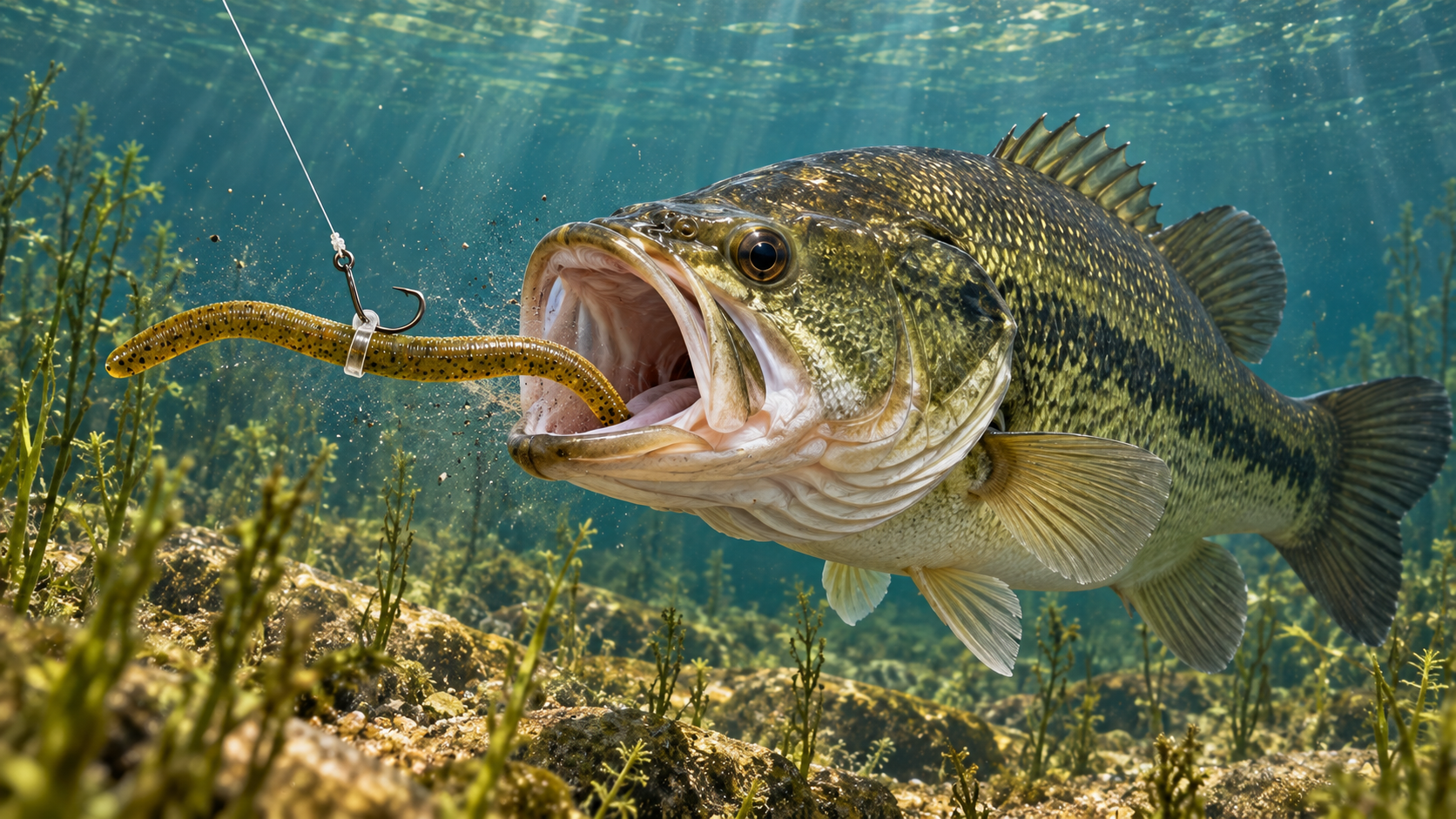
A wacky rig is a soft-plastic worm hooked near its middle, leaving both ends free to move. A straight stick worm is a practical starting bait. As it sinks, its ends flex and flutter.
The basic version has no added weight. The worm’s own density provides casting weight and helps it sink. Different plastics fall at different speeds, so “weightless” does not mean every worm behaves the same way.
This guide focuses on largemouth bass around vegetation, docks, and shoreline cover, with adjustments for smallmouth bass around rock and light current.
A Simple Kayak Fishing Setup
You do not need a dedicated rod to get started. Try this as a starting setup, then adjust for your bait and cover:
| Component | Practical starting choice |
|---|---|
| Rod | Approximately 6 feet 6 inches to 7 feet, medium power, fast action |
| Reel | 2500-size spinning reel |
| Main line | 10–15-pound braid |
| Leader | 8–12-pound fluorocarbon, roughly 4–6 feet long |
| Hook | Size 1 or 1/0 wacky hook, matched to the worm |
| Worm | 5-inch soft-plastic stick worm |
| Accessories | Properly fitted O-rings or rigging sleeves and a rigging tool |
| Landing gear | Rubber-coated net and accessible pliers |
Hook sizes vary among manufacturers. Choose a hook with enough gap to remain clear of the worm or sleeve. Around docks and heavier vegetation, favor the stronger end of the leader range. In open water, you can try a lighter leader.
A shorter rod may feel easier to manage from a seated position. A longer rod can help with casting distance and steering fish around the bow. Pick one you can comfortably use to bring a fish within netting range.
 How to Rig the Worm
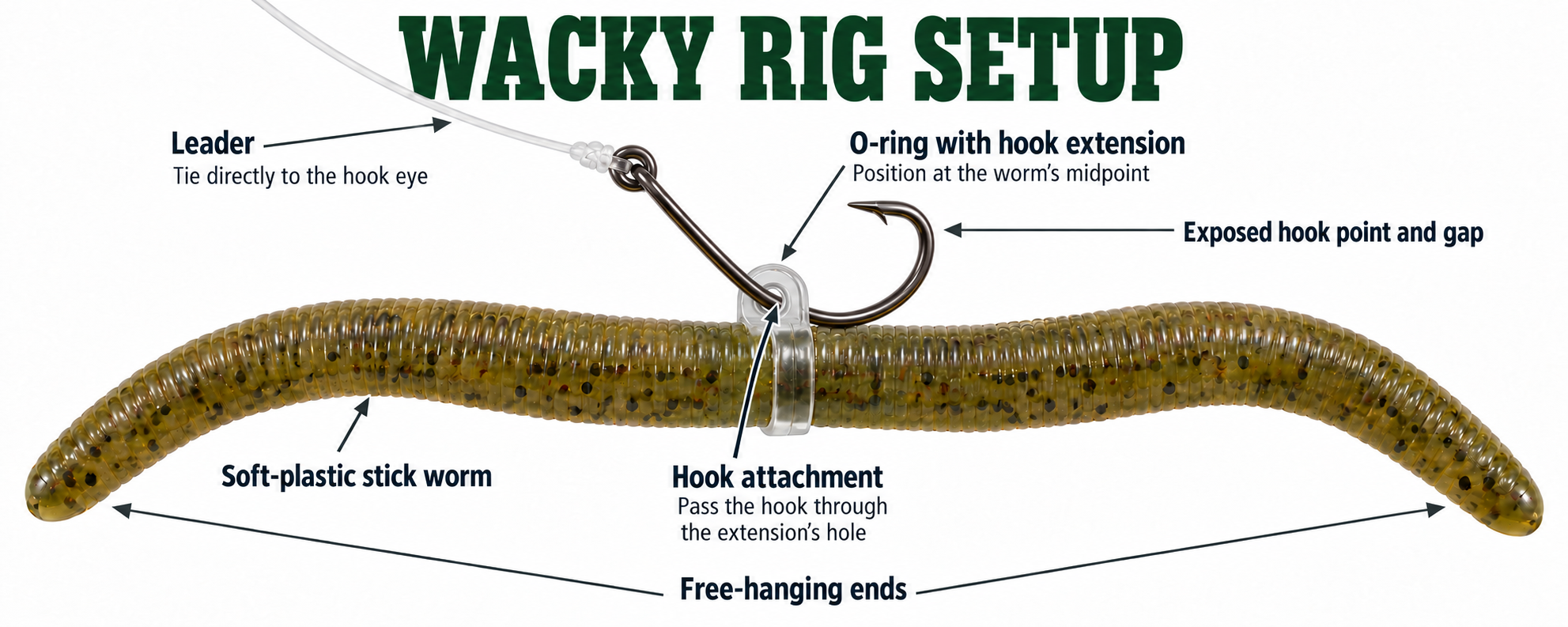
- Tie the hook directly to your leader.
- Find the approximate midpoint of the worm.
- Slide a snug O-ring or purpose-made sleeve to that point.
- Pass the hook beneath the ring or through the sleeve’s designated opening.
- Check that the hook point and gap remain exposed and both ends of the worm hang freely.
You can also hook directly through the worm’s middle. That is the quickest approach, but the plastic may tear more readily. Rings and sleeves can reduce bait damage and replacement time.
For a hook that sits across the worm, use crossed O-rings or a sleeve designed for that orientation. Follow the accessory’s rigging instructions rather than forcing the hook through a poor fit.
Test the finished rig beside your kayak. Watch how it sinks and how much movement a small lift creates. This gives you a useful reference before fishing deeper water.
Choosing Worm Size and Color
Start with a 5-inch worm. Try a 4-inch version when you want a smaller profile, especially in clear water or when fish repeatedly inspect the bait without taking it.
Keep color choices simple:
- Green pumpkin: A useful first choice across many conditions.
- Watermelon or a translucent natural color: Worth trying in clear water.
- Black or black and blue: A starting option in stained water or low light.
These are starting choices, not fixed rules. Finding fish and controlling the fall usually deserve more attention than cycling through a dozen colors.
Where to Fish a Wacky Rig in Minnesota
Think in terms of individual targets rather than casting randomly along an entire shoreline.
Docks and Shaded Shorelines
Cast beside dock posts, along the outside edge, or into accessible shade. Begin with the nearest target before attempting a cast farther underneath.
From a low kayak seat, a controlled sidearm cast can be easier than an overhead cast. Practice skipping in open water before trying it near docks or moored boats. Respect private property and give swimmers and dock users room.
Weed Edges and Open Pockets
Work along the outside of submerged vegetation and cast into visible openings. Let the worm fall beside the weeds rather than dragging it through the thickest growth.
A weed-guard hook can help around scattered vegetation, but it will still snag in dense cover. If nearly every cast returns covered in weeds, move to an edge or switch to a Texas-rigged worm.
 Reeds and Sparse Lily Pads
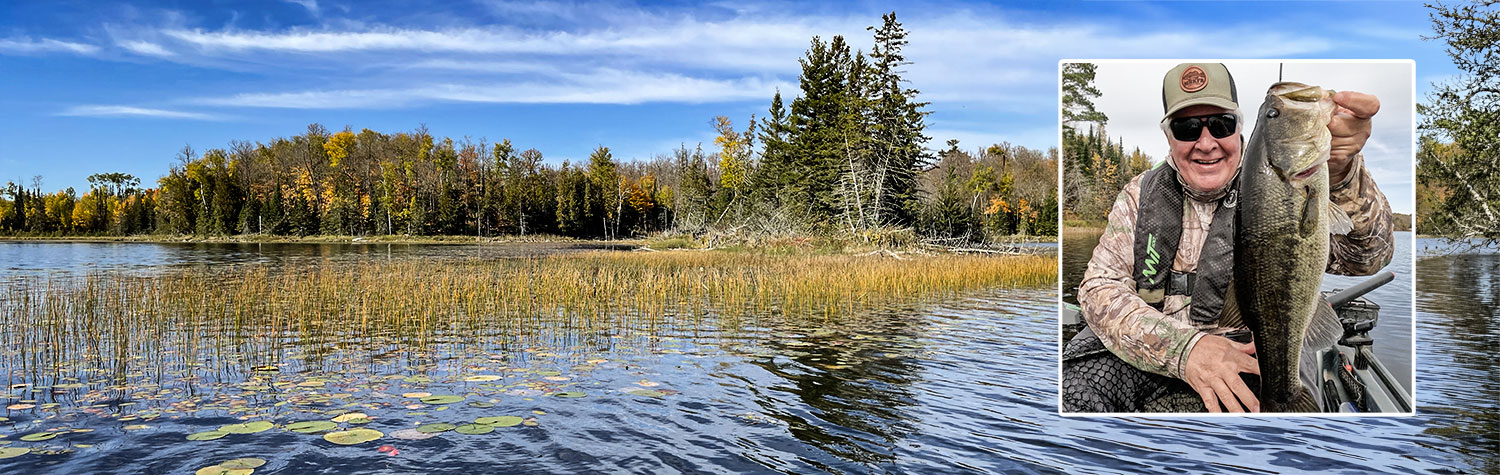
Target open lanes, reed edges, and isolated clumps. A wacky rig is easier to manage where the hook has room to pass through cover. Thick pad mats call for a more protected hook presentation.
Rock and Light Current
For smallmouth bass, try rock edges, isolated boulders, and slower water beside current seams. Cast slightly upstream and follow the drift while managing slack.
Strong current can sweep a weightless worm past the target too quickly. Add modest weight or choose a presentation that gives you better depth control.
How to Fish a Wacky Rig from a Kayak
Set Your Position Before Casting
Stop paddling or pedaling long enough for the kayak to settle. Stay far enough from the target to make a quiet cast without drifting directly over it.
In a breeze, approach from a position that lets the wind carry you along the cover. A modest drift is manageable; a fast drift can pull the worm sideways before it reaches the fish.
Let the Worm Fall
After the cast, allow a small amount of slack so the worm can sink freely. Avoid pulling the line tight immediately, which can swing the bait toward the kayak.
Keep enough contact to see changes in the line. A large loose coil makes bite detection harder.
Watch for a Bite
Look for:
- A twitch or jump in the line.
- Line moving sideways or away from you.
- A fall that stops sooner than expected.
- Unexpected weight when you gently lift the rod.
A bass may take the worm without a sharp tap. Stay attentive throughout the fall.
Lift and Drop Again
If the worm reaches the intended depth without a bite, lift it a foot or two and let it fall again. Add a gentle shake if needed.
After a few deliberate drops, retrieve and cast to the next target. Repeatedly working empty water is less useful than putting the bait beside another promising piece of cover.
Reel Down and Sweep
When the line moves or you feel a fish, reel in slack and make a firm, controlled sweep with the rod. With a conventional exposed-point wacky hook, an exaggerated overhead hookset is usually unnecessary.
Do not deliberately wait several seconds for the fish to swallow the bait. Prompt bite detection and hooksetting help reduce deep hooking. If using a true circle hook, follow its different hooksetting instructions.
When to Add Weight
Start without added weight in shallow, sheltered water. Try a light weighted wacky jighead—approximately 1/32 to 1/16 ounce as a starting range—when wind, depth, or current prevents you from controlling the bait.
Use the lightest weight that lets you reach and follow the target zone. Weight changes the fall, so watch the rig beside the kayak again after making an adjustment.
A nail weight inserted into one end creates a Neko-style presentation. That is a useful related option, but it changes the worm’s posture and action rather than simply duplicating a balanced wacky rig.
Adjusting Through Minnesota’s Open-Water Season
Use water temperature, vegetation, and fish location to guide these adjustments. Northern Minnesota waters may develop later than southern and metro-area lakes.
| Period | Places to investigate | Adjustment to try |
|---|---|---|
| Spring | Sheltered bays, emerging weeds, and nearby depth changes | Slow the fall and pause between lifts |
| Early summer | Docks, developing weed edges, and shallow cover near deeper water | Make precise casts and check several targets |
| Midsummer | Shade, healthy vegetation, and outside weed edges | Add light weight when needed to reach deeper fish |
| Early fall | Remaining green weeds, rock transitions, and areas holding baitfish | Find activity, then work individual targets |
| Late fall | Cover near deeper water and remaining productive vegetation | Slow down; switch rigs if depth control becomes difficult |
Avoid repeatedly targeting visibly nesting bass. Seasonal patterns are starting points, and bass may use several depths on the same day.
Common Mistakes
Working the bait constantly. Give the worm uninterrupted time to fall.
Letting the kayak tow the rig. Reposition, shorten the cast, or adjust weight when drift pulls the worm away from cover.
Ignoring the line. Watch it even when you do not feel a bite.
Fishing dense vegetation with an exposed hook. Move to openings or use a more protected presentation.
Changing colors before changing location. Check another depth or type of cover when a stretch produces no activity.
Waiting too long to set the hook. Reel down and respond when the line moves or you feel the fish.
Check Minnesota Fishing Regulations Before Launching
Check the current Minnesota DNR fishing regulations and lake-specific rules before each trip. Bass harvest seasons, special regulations, border-water rules, and seasonal closures can affect what is allowed on a particular water.
Use the DNR’s LakeFinder to review the lake you plan to fish. Do not assume that a rule from a nearby lake applies to your destination.
Your First Wacky Rig Outing
Pick a sheltered shoreline with scattered cover. Tie on a 5-inch green pumpkin worm, use a properly matched wacky hook, and start without added weight. Fish the first cover you encounter quietly. Let the worm sink, watch the line, and give it a couple of lift-and-drop presentations before moving on. As you get bites, note the depth, shade, and cover involved so you can look for similar targets.
The skill to practice is giving the worm a natural fall while keeping your kayak and line under control.
Sources
- Minnesota DNR, Fishing Regulations: https://www.dnr.state.mn.us/regulations/fishing/index.html
- Minnesota DNR, Fishing and LakeFinder resources: https://www.dnr.state.mn.us/fishing/index.html
- Rapala and VMC, rigging rings and bait preservation: https://blog.rapala.com/news/vmc-continues-to-tweak-your-fishing-techniques/
- Rapala, wacky rig examples and tackle approaches: https://blog.rapala.com/news/vmc-hooks-and-rapala-baits-help-walters-to-first-half-bassmaster-elite-aoy-lead/
Tackle ranges, kayak tactics, and seasonal adjustments are practical starting recommendations, not guarantees or lake-specific fishing reports.

Related Posts