A ChatterBait might be one of the most effective and versatile bass lures you can…
Few freshwater fishing experiences compare to seeing a Minnesota Musky follow your lure to the kayak
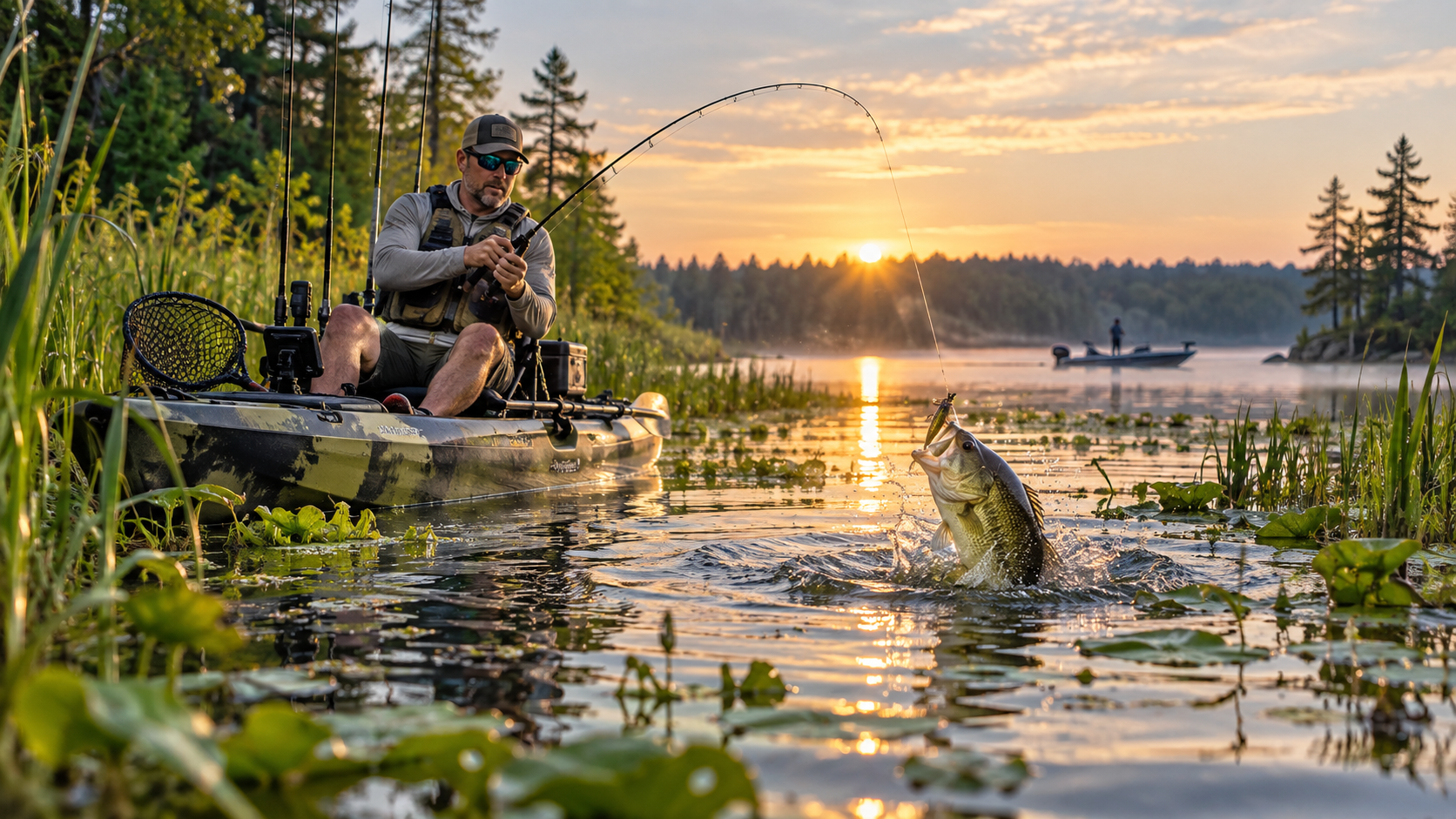
The fish appears from nowhere, tracks the bait through the final turn and strikes only a few feet from your seat. Catching a musky is challenging from any watercraft. Doing it from a kayak adds excitement, mobility and a remarkably close connection to the fish. A fishing kayak can quietly reach shallow vegetation, narrow channels, rocky shorelines and other productive areas that are difficult to approach in a larger boat.
Success, however, requires more than oversized lures and heavy tackle. Musky kayak anglers must understand seasonal movements, choose water that matches their experience, organize their equipment carefully and prepare to safely land and release a powerful fish from a small platform.
This guide covers what you need to know before pursuing Minnesota’s largest freshwater predator from a kayak.
Why Minnesota Is a Premier Musky Fishing Destination
Minnesota offers an exceptional combination of native musky waters, stocked fisheries and trophy-producing lakes. The Minnesota Department of Natural Resources reports that muskies are present in more than 100 lakes, including both naturally occurring and stocked populations.
The state’s waters support two types of musky:
- Pure-strain muskellunge, which have the potential to grow beyond 50 inches
- Tiger muskies, a sterile hybrid of a northern pike and muskellunge
Tiger muskies generally grow faster but do not reach the same maximum size as pure-strain fish. They are stocked in several heavily used Twin Cities-area lakes, giving kayak anglers productive opportunities close to the metro. Learn more about Minnesota muskellunge.
Minnesota’s mix of expansive northern lakes, smaller metropolitan fisheries, rivers, weed-filled bays and rocky island systems provides options for nearly every style of musky fishing.
Why Fish for Musky From a Kayak?
Musky fishing has traditionally been associated with large boats, powerful trolling motors and enormous collections of tackle. A properly equipped fishing kayak offers several meaningful advantages.
Quiet presentations. A kayak creates less disturbance than a large boat. This can be valuable when fishing shallow vegetation, calm bays, clear water or heavily pressured lakes.
Access to overlooked water. Kayaks can slide into shallow weed pockets, protected bays, narrow channels and small lakes that receive less attention from conventional musky boats.
Precise boat control. Pedal-drive kayaks allow an angler to maintain position while casting, follow a weed edge and quickly adjust when a fish follows the lure.
A closer fishing experience. This is really what makes Musky fishing from a kayak special! Everything happens near the water. You see the fish follow, turn and strike at eye level. Even a smaller musky can deliver an unforgettable fight from a kayak…WOOHOO!
Choosing a Musky Fishing Kayak
Musky fishing is not the place for a narrow, lightly equipped recreational kayak. Large lures, heavy rods and powerful fish place additional demands on the watercraft.
Look for the following features:
- A wide, stable hull with a comfortable elevated seat
- Enough deck space to manage long rods and large lures
- A large rear storage area for a musky net
- Adjustable foot braces or an efficient pedal drive
- A rudder for controlling direction in wind
- Gear tracks for electronics and accessories
- A weight capacity that comfortably exceeds the angler and equipment load
A 12 to 14 foot fishing kayak is often a good choice. Pedal propulsion is especially useful because it leaves both hands available for casting, controlling the lure and fighting fish. Many Minnesota Kayak Musky Anglers add electric motors to their kayaks so they can cover lots of water and tempt big muskies to chase their lure.
Large waters such as Mille Lacs, Leech Lake and Lake Vermilion can develop serious waves quickly. Fish protected areas, stay reasonably close to shore and avoid conditions that exceed your skills or equipment.
Learn more about the Best Fishing Kayaks For Minnesota
Essential Musky Kayak Fishing Equipment
Musky tackle needs to be strong enough to set hooks, control the fish and complete the release without unnecessary exhaustion.
Rod: A long heavy or extra-heavy musky rod provides casting distance, leverage and the length needed for wide turns beside the kayak. The ideal power depends on the lures you plan to throw.
Reel, choose a durable bait casting reel with:
- A strong drag system and sufficient line capacity
- A comfortable handle
- A gear ratio appropriate for the presentation
Faster reels work well for bucktails and baits that need to be retrieved quickly. Moderate-speed reels offer additional power for high-resistance lures.
Line and leader: A common musky setup includes:
- 80 to 100-pound braided line
- A heavy fluorocarbon or wire leader
- Musky-rated snaps and swivels
Inspect the leader, knot, split rings and hooks regularly while fishing. Any damaged component should be replaced immediately.
Musky-sized landing net: A large net with a deep, rubber-coating is essential. The net should function as an in-water holding area while you organize tools and remove hooks. Practice reaching and deploying it from your seat before hooking a fish.
Release tools every musky angler should carry:
- Long-nose pliers
- Long-handled hook-removal pliers
- Heavy-duty hook cutters
- Jaw spreaders as an emergency tool
- Protective gloves
- A bump board or floating measuring board
- A compact first-aid kit
Keep the hook cutters where they can be reached instantly. Cutting a hook is often faster and safer than forcing it free.
Where to Find Musky in Minnesota
Minnesota has several distinct types of musky water. The best choice depends on your experience, kayak and comfort with changing weather.
Large northern musky lakes
Lake Vermilion, Leech Lake, Cass Lake and other northern fisheries can produce exceptional fish. These waters contain combinations of islands, rock reefs, points, vegetation and open-water forage. Lake Vermilion, for example, offers rocky shorelines, numerous bays, islands and areas of aquatic vegetation. The diversity creates many possible musky locations, but its size demands careful trip planning.
Mille Lacs Lake
Mille Lacs is known for trophy muskies, including Minnesota’s current catch-and-release record of 58¼ inches. It also covers more than 200 square miles, making it particularly vulnerable to wind and waves. Kayak anglers should concentrate on manageable shoreline sections, protected bays and favorable wind conditions rather than attempting to cover large amounts of open water.
Mille Lacs also has lake-specific regulations, including seasonal night-fishing restrictions in some years. Always check its current regulations before launching. Check current Mille Lacs regulations.
Lake Minnetonka
Lake Minnetonka offers a long-established stocked musky fishery with extensive vegetation, points, channels and offshore structure. It provides excellent opportunities near the Twin Cities, but heavy recreational boat traffic can make early mornings, weekdays and the fall season better choices for kayak anglers.
Metro tiger musky lakes
Several smaller lakes in and around the Twin Cities are stocked with tiger muskies. Their manageable size can make them more approachable for kayak anglers learning how to cast large lures and perform boatside maneuvers. Because stocking programs and special regulations can change, use the Minnesota DNR’s LakeFinder reports to verify the species, stocking history, public access and regulations for an individual lake.
Check out the video below for my experience catching a Bryant Lake, MN Tiger Musky
Ron’s Musky Lakes
Lake Rebecca near Rockford Minnesota is used by the MN DNR to harvest musky eggs. It also holds some very nice muskies. I’ve had some incredible musky action there including a fish that jumped a foot away my kayak that I’m sure was in the 50 inch class. It left me soaked and shaking before it spit the hook. It’s a wonderful resource for Musky fishing in Minnesota. Please treat fish caught and released there gently.

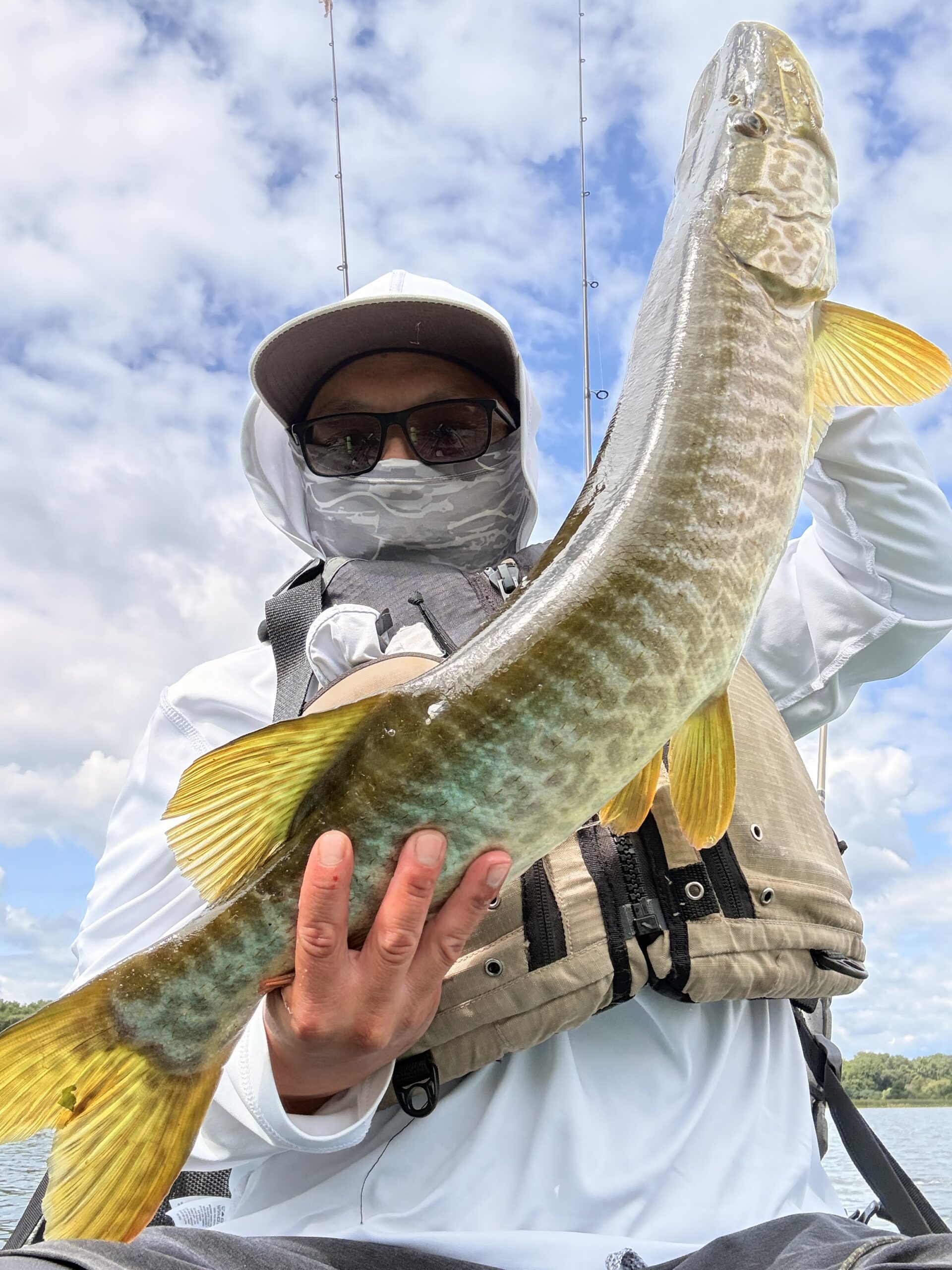
Bald Eagle Lake north of White Bear Lake Minnesota is used by the MN DNR as a secondary musky egg harvest location by many reports. It’s close to the metro area and you should expect lots of boat traffic. It’s pressured, but remains a great fishery for bass and pike as well as musky. The picture above is from a fall outing with a friend (Ryan). This one was over 40 inches.
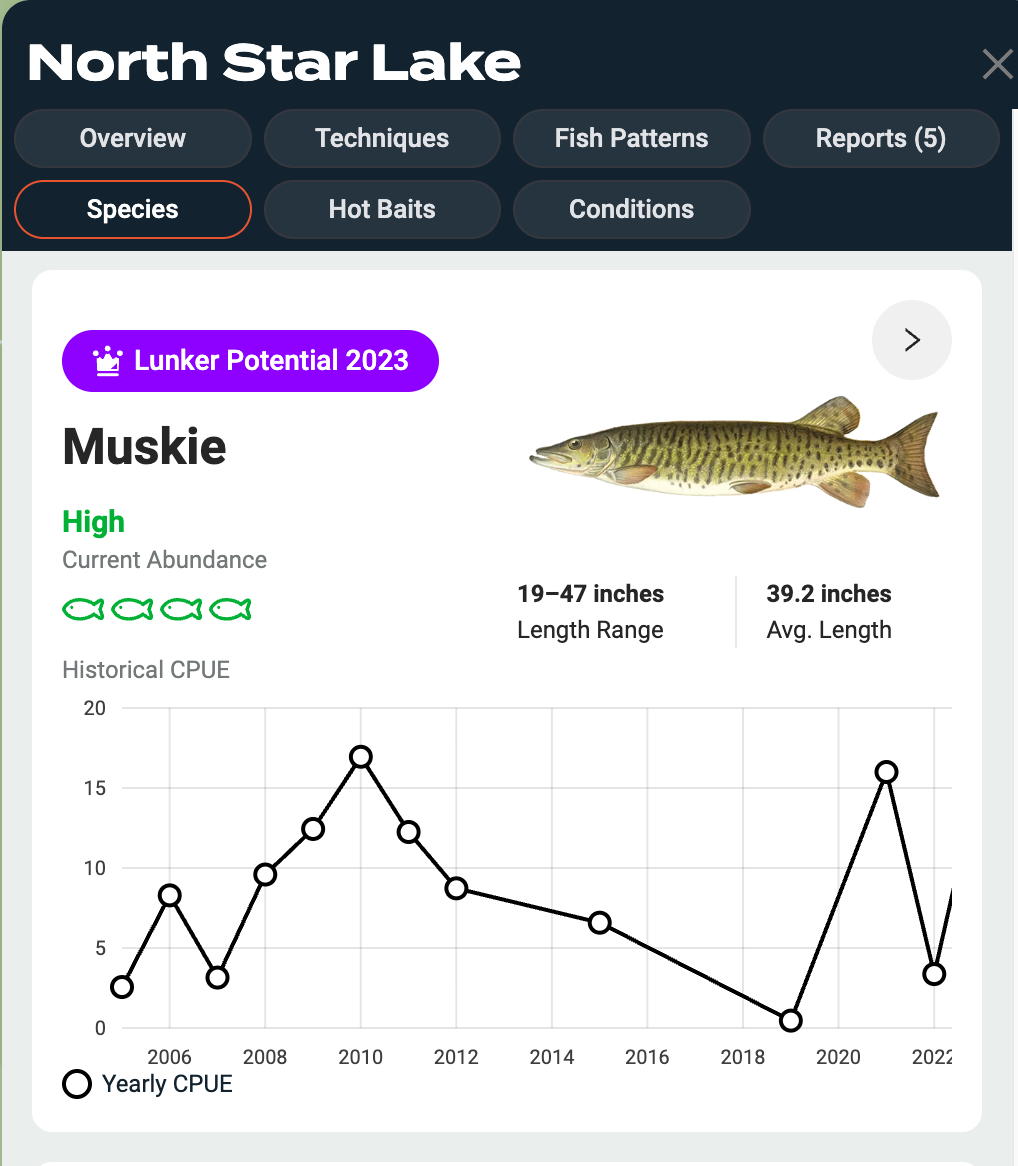
North Star Lake by Marcell, Minnesota. It’s a well known destination for musky fishing. It can be a tough lake to fish, it has clear, spring fed water, but it has lots of great vegetation that musky like to hide in. It’s an Omnia Fishing Lunker Potential for Musky Lake. North Star Lake is also a destination for the MNKFA Northwoods Kayak Fishing Adventure.
Productive Musky Habitat
Musky locations change throughout the year, but several types of structure consistently deserve attention.
Weed edges. Healthy cabbage, coontail and other submerged vegetation attract panfish, perch and other forage. Cast along both the outside edge and irregular features such as points, pockets, inside turns and isolated clumps.
Rocky points and reefs. Rock provides ambush cover and can concentrate forage. Wind blowing across a point or reef may make it especially productive.
Islands and saddles. The shallower connection between islands or between an island and the mainland can create a natural travel route. Fish the deeper edges and nearby structural changes.
Narrows and current areas. Channels, river mouths and constricted areas concentrate baitfish. Position the kayak outside the strongest current and work the seams, eddies and nearby cover.
Shallow, protected bays can be productive early in the season, particularly when they contain emerging vegetation or warmer water.
Open-water forage. During summer and fall, muskies may suspend near schools of cisco, tullibee or other forage. Electronics become particularly helpful when fish are no longer closely associated with visible shoreline structure.
Seasonal Musky Lure Tip From Tyler Roden
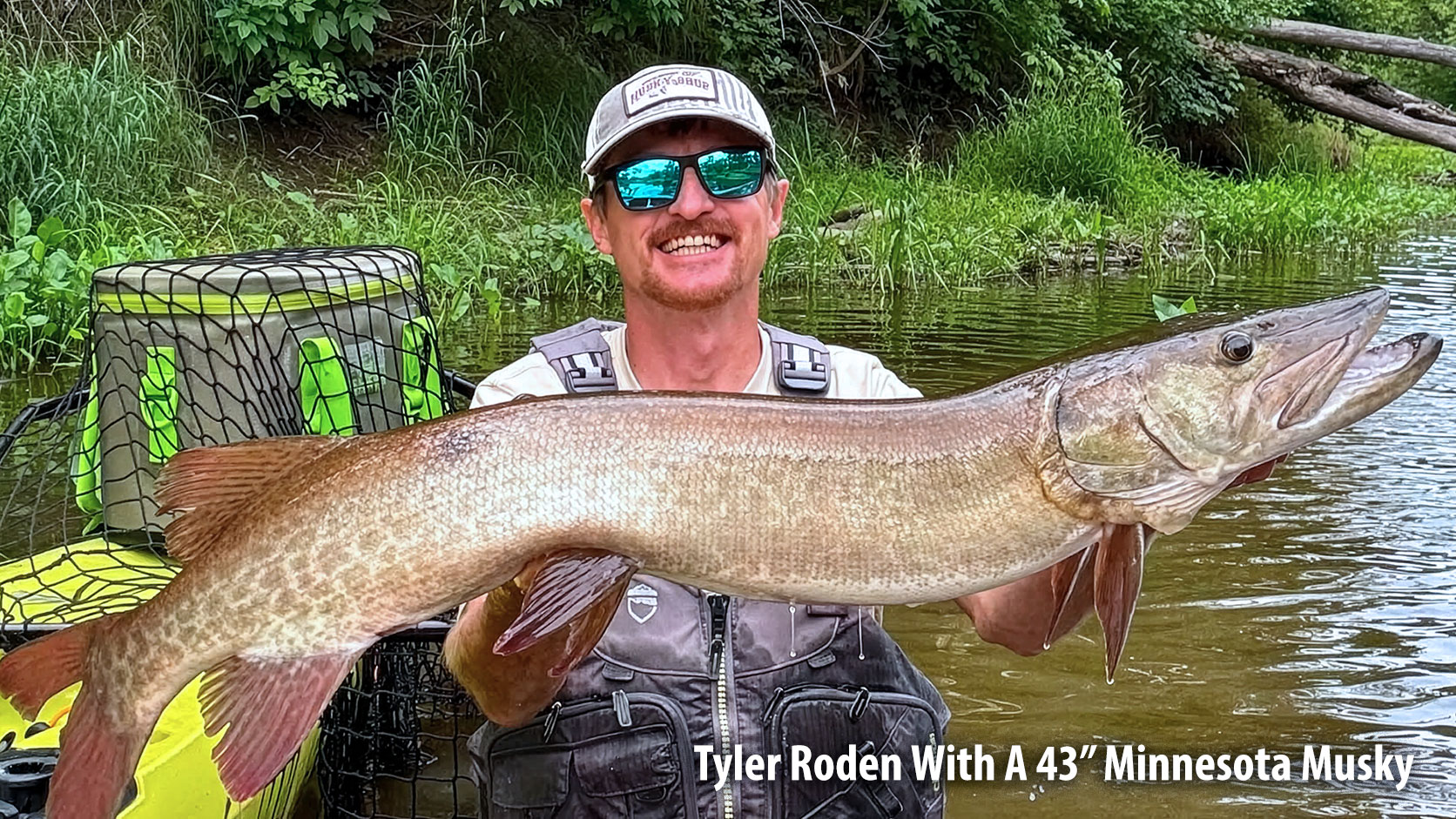
Don’t be afraid to throw smaller lures early in the season, I’ve found that’s what works. On the opposite end, later in the season don’t be afraid to GO BIG! Musky are packing on pounds to survive the winter. Check out and subscribe to Tyler’s YouTube Channel.
Minnesota Musky Fishing by Season
Early season: June Opening dates change with the calendar year, so confirm the current season before each year’s first trip. Check Minnesota fishing seasons.
Post-spawn muskies may use warming bays, developing vegetation, shallow rock and areas near spawning habitat. Smaller or moderately sized lures can be easier for fish to track and may match early-season forage.
Good early-season options include:
- Small bucktails
- Glide baits
- Shallow-running crankbaits
- Twitch baits
- Compact swimbaits
Work methodically and give special attention to the warmest productive water.
Summer: July and August: As vegetation develops, outside weed edges, offshore structure and open-water forage become more important. Bucktails are popular because they cover water efficiently. Topwater lures can also be effective during low-light periods, especially over vegetation and shallow structure.
Hot weather requires special care. Warm water contains less oxygen, and a prolonged fight can place significant stress on a large fish. Many responsible musky anglers stop targeting them when surface temperatures approach 80°F or when conditions make a quick, healthy release unlikely.
Early fall: September and October Cooling water often brings strong feeding opportunities. Muskies may use green vegetation, rocks, points and areas containing concentrations of baitfish.
This is an excellent period for:
- Large bucktails
- Diving-and-rising jerkbaits
- Rubber baits
- Crankbaits
- Gliders
- Topwater presentations during stable conditions
Fall wind can be a serious challenge. Select protected water and plan the return trip before moving far from the access.
Late fall: Can produce some of Minnesota’s largest muskies, but it is also the most dangerous period for kayak fishing. Cold water, short days and rapidly changing weather leave little margin for error. Wear clothing designed for immersion, stay close to shore, fish with a partner and avoid taking chances to reach one more spot. A fish is never worth risking a cold-water emergency.
The Best Musky Lures for Kayak Fishing
Kayak anglers can use most conventional musky presentations, but lure size and resistance deserve consideration. Throwing enormous, high-resistance baits all day from a seated position can be exhausting.
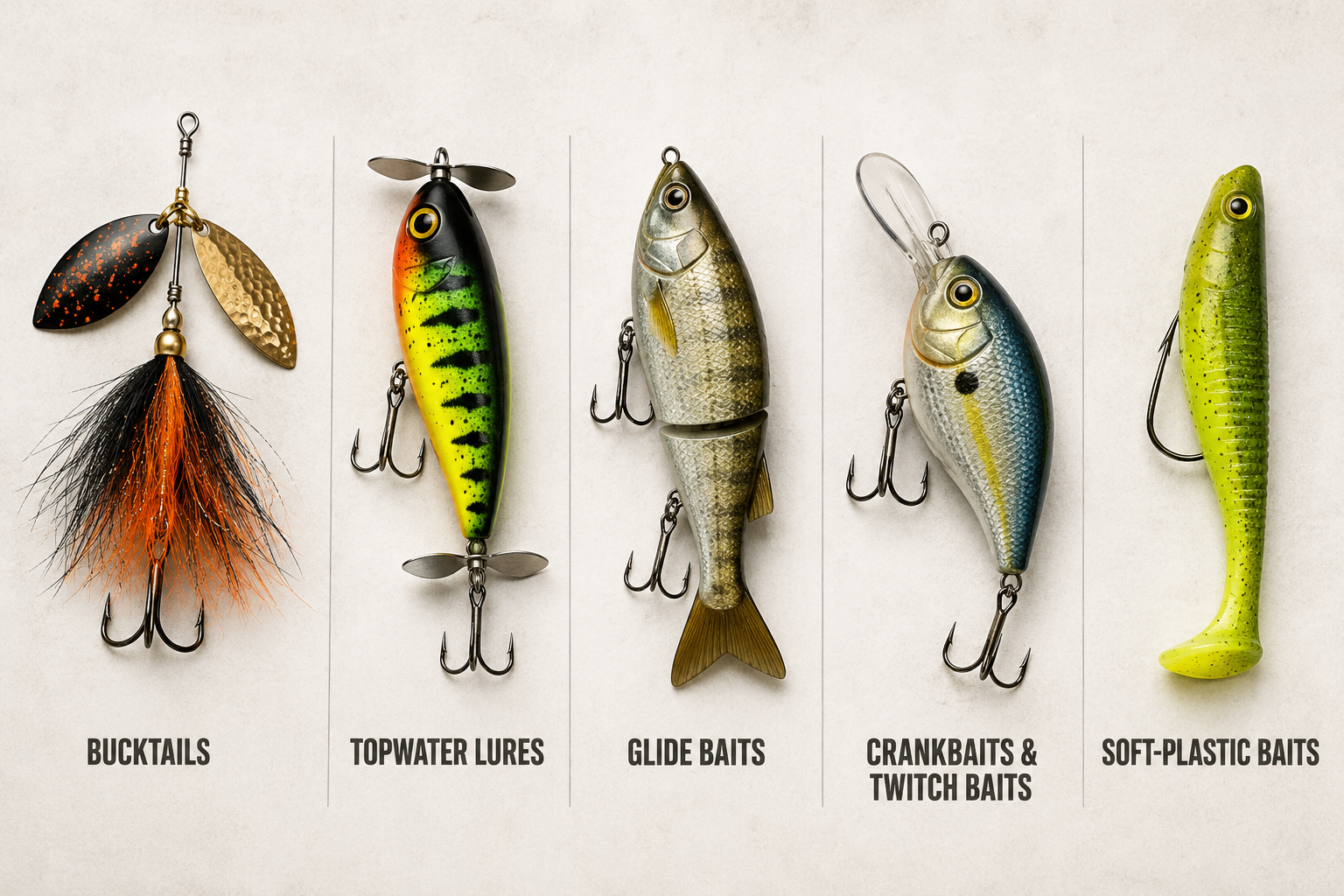
Bucktails
Bucktails are excellent search baits. They cast well, cover water and can be retrieved at different speeds. Compact single- and double-blade models are often more comfortable from a kayak than the largest high-resistance blades.
Topwater lures
Prop baits, walk-the-dog lures and creepers can be effective over shallow vegetation, rock and low-light feeding areas. Topwater fishing also lets the angler monitor the bait and anticipate a strike.
Glide baits
Gliders move from side to side with rhythmic rod movements. They are effective around weed edges, isolated cover and fish that follow faster-moving lures without striking.
Crankbaits and twitch baits
Crankbaits can be cast or trolled along weed edges, rocky shorelines and breaks. Floating or suspending twitch baits are especially useful when fish are holding near shallow cover.
Soft-plastic baits
Large rubber baits can reach deeper water and trigger fish with their irregular movement. Use them carefully around the kayak because their weight and large hooks can make casting hazardous.
Is Kayak Musky Fishing for you?
It’s one of freshwater fishing’s greatest challenges. It’s why most Minnesota kayak anglers avoid this species. Musky are tough to catch and when you do catch one, handling them can be tough, if not a little dangerous! The key for Muskies is preparation. Choose water that matches your experience, organize the kayak before launching, use tackle capable of controlling a large fish and make safe release practices part of the plan.
You may cast for hours without seeing a musky. Then, on the next retrieve, a shadow may appear behind the lure and follow it all the way to the kayak. That possibility—and the explosive moment that sometimes follows—is what makes Minnesota musky fishing so unforgettable.

Related Posts