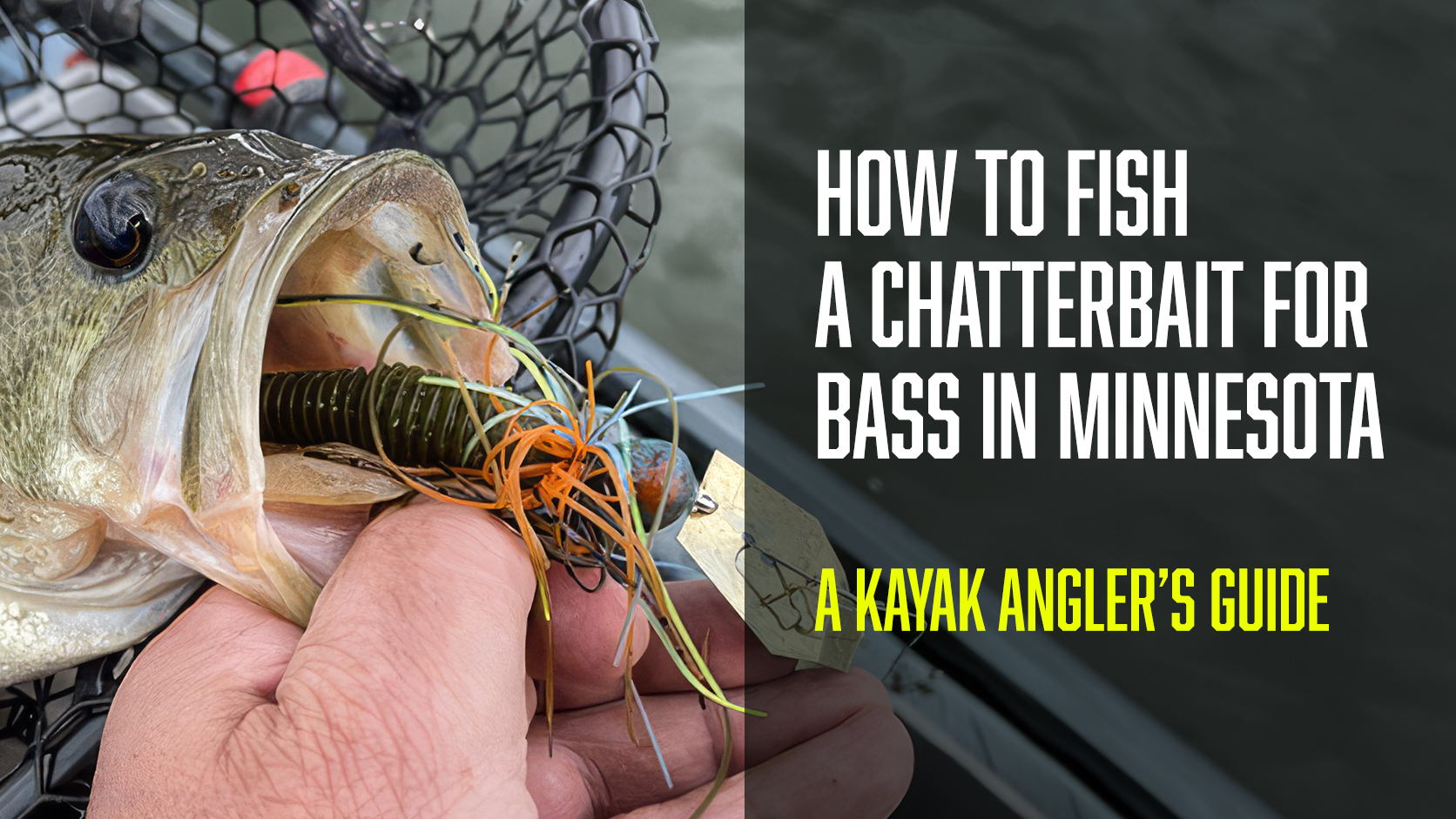
A ChatterBait might be one of the most effective and versatile bass lures you can…
Walleye Kayak Fishing in Minnesota: The Complete Guide
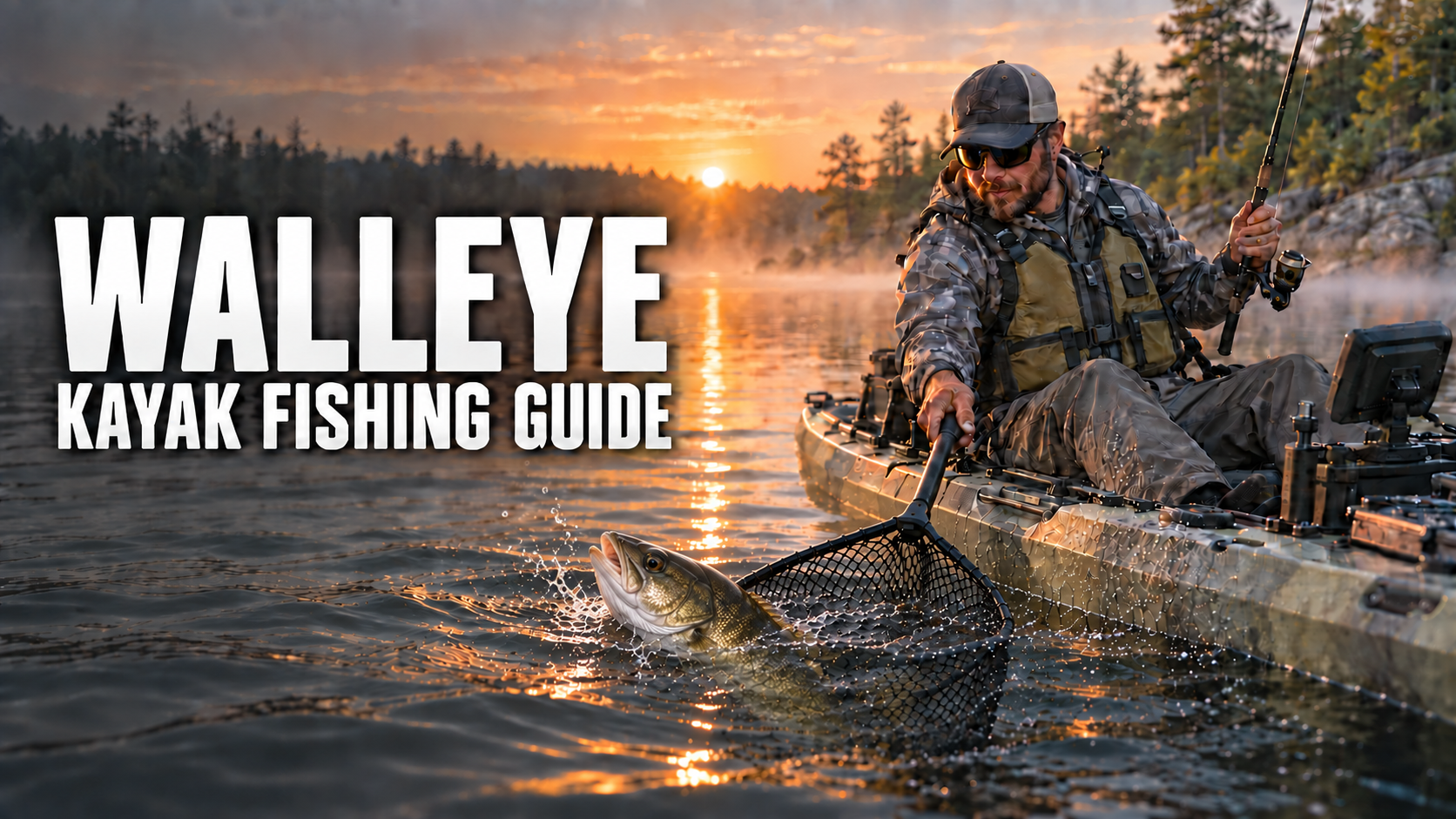
Minnesota may be known as the Land of 10,000 Lakes, but one fish stands above the rest: the walleye. These prized gamefish are famous for their marble-like eyes, sharp teeth and excellent table fare. They can also be challenging to locate and catch—especially when fishing from a kayak.
Most MNKFA members prefer bass and pike fishing over walleye. But those of us that grew up fishing Minnesota understand that it is the state fish and probably the most fished for species by all types of anglers.
This guide covers where to find Minnesota walleyes and how to catch them from a kayak.
Understanding Minnesota Walleye Habitat
Walleyes move throughout the year based on water temperature, available forage, light levels and spawning activity. Finding them begins with identifying the structure and cover they are using during the current season.
Productive walleye locations include:
- Rocky shorelines, gravel points
- Underwater reefs
- Breaklines and drop-offs
- Outside weed edges
- Mid-lake humps
- Current areas, river mouths
- Saddles between pieces of structure
- Windblown shorelines
Walleyes prefer lower-light conditions, but that does not mean they only bite at sunrise, sunset or after dark. During the day, they may move deeper, hold tighter to structure or use thick vegetation for shade and cover. Wind, cloud cover and stained water can extend feeding activity throughout the day.
Spring Walleye Kayak Fishing
Spring is one of the best times to catch walleyes from a kayak because many fish remain relatively shallow after spawning. Begin by searching near spawning areas such as rocky shorelines, gravel flats, river mouths and areas with moving water. Walleyes may slide toward the first nearby drop-off as the water warms, but they often remain within easy reach of kayak anglers.
Productive Spring Locations
- Shoreline points near spawning areas
- Gravel and rubble transitions
- Current seams
- Emerging weeds
- Shallow flats adjacent to deeper water
- Warm bays holding baitfish
Wind blowing into a rocky shoreline can create an excellent spring opportunity. Waves stir up the bottom, reduce visibility and push food toward shore. Use caution, however, because the same wind that activates walleyes can quickly make kayak travel difficult.
Best Spring Presentations
A jig and minnow is the traditional spring favorite. Use the lightest jig that allows you to maintain bottom contact. Cast toward the structure, allow the jig to reach the bottom and retrieve it with short hops or a slow swimming motion. When the water is cold, subtle movements and longer pauses are often more effective than aggressive jigging.
Other good spring options include:
- Small paddle-tail swimbaits
- Hair jigs
- Suspending jerkbaits
- Shallow-running crankbaits
- Slip bobbers with minnows or leeches
Summer Walleye Kayak Fishing
As the water warms, walleye locations become more varied. Some fish move toward deeper structure, while others remain in healthy vegetation or feed on shallow flats during low-light periods.
Electronics become especially valuable during summer. Use your fish finder to locate depth changes, bottom transitions, weed edges and groups of baitfish. Avoid spending too much time fishing marks that appear inactive. Use the kayak’s mobility to continue searching until you locate feeding fish.
Productive Summer Locations
- Outside weedlines
- Main-lake points
- Underwater humps
- Rock-to-sand transitions
- Deep edges of flats
- Saddles and inside turns
- Areas where wind pushes bait toward structure
Not every summer walleye will be deep. Shallow cabbage, coontail and other vegetation can hold walleyes throughout the season, especially when the weeds are green and producing oxygen.
Best Summer Presentations
Several techniques work well from a kayak:
Slip Bobber Fishing
A slip bobber allows you to suspend a leech, nightcrawler or minnow at a precise depth. It is especially effective when walleyes are concentrated on a small rock pile, weed edge or piece of offshore structure.
Use an anchor, stakeout pole or electronic anchoring system to keep the kayak positioned away from the fish. Cast beyond the target and allow the bait to settle into the strike zone.
Live-Bait Rigging
A live-bait rig with a leech, crawler or minnow can be slowly worked along a breakline. Kayak anglers can control the presentation with a pedal drive, paddle or low-powered electric motor.
Use enough weight to maintain occasional bottom contact without dragging excessively through rocks or vegetation.
Jigging
Vertical jigging works well when fish are concentrated beneath the kayak. Soft plastics, minnows and jigging-style artificial lures can all produce. Watch your line carefully. Walleye bites may feel like a solid strike, a slight tap or simply extra weight when you lift the rod.
Trolling Crankbaits
Trolling is one of the best ways to find scattered summer walleyes. Run crankbaits along weed edges, breaklines and large flats until you identify a productive depth or area.
Pedal-driven kayaks are particularly useful for trolling because they allow you to maintain forward movement while holding the rod or making adjustments.
Fall Walleye Kayak Fishing
Fall can provide some of the year’s best walleye fishing. Cooling water concentrates baitfish, and walleyes feed heavily as winter approaches. Rock, remaining green vegetation and areas with current become especially important. Fish may move shallower during cloudy weather, windy conditions and low-light periods.
Productive Fall Locations
- Steep shoreline breaks
- Rocky points
- Remaining green weedlines
- River and creek mouths
- Deep holes near shallow feeding areas
- Reefs adjacent to deep water
Best Fall Presentations
Larger minnows, paddle-tail swimbaits, crankbaits and jigging lures can all be effective. Slow your presentation as water temperatures drop, but do not assume every fish wants a motionless bait. A steadily retrieved swimbait can trigger aggressive walleyes throughout the fall.
Cold water dramatically increases the danger of an unexpected capsize. Dress for the water temperature, not the afternoon air temperature, and avoid fishing alone when conditions are questionable.
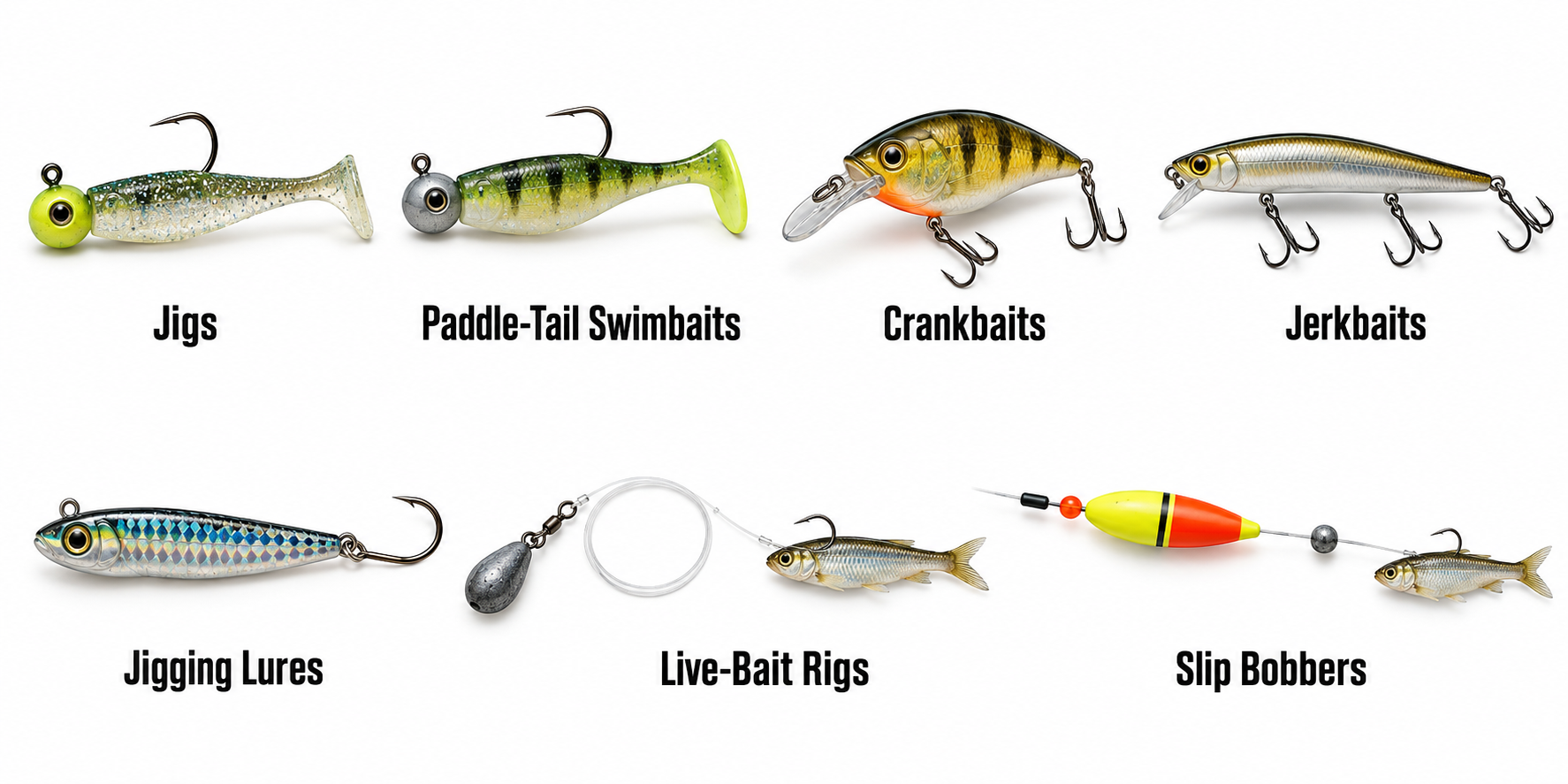
Best Walleye Lures for Kayak Fishing
You do not need an overloaded tackle crate to catch walleyes. A compact selection of proven baits will cover most Minnesota situations.
Jigs
Carry jigs in several weights so you can adjust to depth, wind and current. Pair them with minnows, leeches, crawlers or soft-plastic baits.
Paddle-Tail Swimbaits
Swimbaits can be cast over flats, retrieved along weedlines or jigged beneath the kayak. Natural baitfish colors are reliable in clear water, while brighter colors can help in stained water or low-light conditions.
Crankbaits
Carry shallow-, medium- and deep-diving crankbaits. Choose a model that reaches the depth where fish are holding without constantly digging into the bottom.
Jerkbaits
Suspending jerkbaits are excellent for shallow spring and fall walleyes. Use slow pulls and long pauses in cold water.
Jigging Lures
Vertical jigging lures can trigger fish holding on reefs, sharp breaks and deep structure. They are especially useful when electronics show walleyes directly beneath the kayak.
Live-Bait Rigs and Slip Bobbers
Live bait remains one of Minnesota’s most dependable walleye options. Keep terminal tackle organized so you can quickly switch between jigging, rigging and bobber fishing.
How to Use Electronics to Find Walleyes
A fish finder can shorten the search process, but it should be used to understand the lake—not simply to look for fish-shaped marks.
Use electronics to identify:
- Changes in bottom depth
- Hard-to-soft bottom transitions
- Isolated rocks
- Weedline depth
- Schools of baitfish
- Fish positioned near the bottom
- Productive trolling speeds
- Waypoints for future trips
Side-imaging sonar can help kayak anglers locate structure without paddling directly over it. GPS mapping makes it easier to follow contours, repeat productive drifts and return safely to the launch.
Once you find fish, mark the location immediately. Wind and waves can move a kayak surprisingly far while you are landing or releasing a walleye.
Kayak Positioning and Boat Control
Good boat control is one of the most important parts of kayak walleye fishing. Whenever possible, approach the fishing area from downwind. This allows you to use the wind for a controlled drift while casting or vertically jigging.
Useful positioning tools include:
- Pedal-drive systems
- Rudders
- Drift socks
- Anchors
- Electronic anchoring motors
- GPS-enabled trolling motors
Avoid anchoring in heavy waves, strong current or busy boating areas. If you use an anchor, attach it through a properly installed trolley system and keep a cutting tool within reach in case the line must be released quickly.
A Simple Kayak Walleye Setup
A practical walleye kayak does not have to be complicated.
- One medium-light spinning rod for jigs
- One medium spinning rod for rigs or crankbaits
- A compact tackle box
- Landing net
- Fish finder with GPS
- Pliers and line cutter
- Measuring board
- Paddle—even when using pedals or a motor
- Navigation light when fishing in darkness
Walleye Fishing at Night From a Kayak
Walleyes frequently move onto shallow rocks, points and flats after dark. Trolling or casting crankbaits can be extremely effective, but nighttime kayak fishing requires extra preparation.
Before launching:
- Study the lake during daylight
- Mark the access and hazards on your GPS
- Check the weather forecast
- Install the required navigation lighting
- Wear reflective clothing or add reflective material to your kayak
- Keep a headlamp and backup light accessible
- Tell someone where you are fishing and when you expect to return
Avoid heavily traveled areas whenever possible. Never assume a powerboat operator can see you.
Walleye Handling and Release
Wet your hands before handling a fish and support it horizontally rather than holding it only by the jaw. Prepare your measuring board, camera and release tools before removing the fish from the water.
Minimize handling time, especially during warm weather. If a fish appears exhausted, hold it upright in the water until it can swim away under its own power.
When fishing deep water, learn how rapid pressure changes can affect walleyes and adjust your approach accordingly. Catch-and-release fishing is most successful when fish are brought in efficiently and returned to the water quickly.
Minnesota Walleye Regulations
Walleye seasons, possession limits and size restrictions can change. Some popular waters—including Mille Lacs Lake, Upper Red Lake, Lake of the Woods and certain border waters—may have rules that differ from statewide regulations.
Always check the current Minnesota fishing regulations and any posted lake-specific rules before fishing. Minnesota anglers age 16 and older generally need a valid fishing license.
Start Your Minnesota Kayak Walleye Adventure
Catching walleyes from a kayak combines strategy, boat control and the excitement of being close to the water. Start with manageable lakes, learn how fish relate to structure and keep your tackle selection simple. Each trip will help you become better at reading conditions and predicting where walleyes are likely to feed.
Ready to meet other anglers, discover new water and learn more about kayak fishing in Minnesota? Connect with the Minnesota Kayak Fishing Association and become part of Minnesota’s growing kayak-fishing community.

Related Posts